Ryan Malloy
f6a09592f1
Ryan Malloy
f6a09592f1
dev/screenshot.py — end-to-end automated demo:
  * onboards HA via /api/onboarding (user creation + auth_code flow)
  * subsequent runs log in via /auth/login_flow with saved credentials
  * adds the omni_pca config entry via /api/config/config_entries/flow
  * uses HA's template REST endpoint to discover the panel device_id
  * launches a headless chromium via playwright with prefetched auth tokens
  * captures 6 deep-linked screenshots:
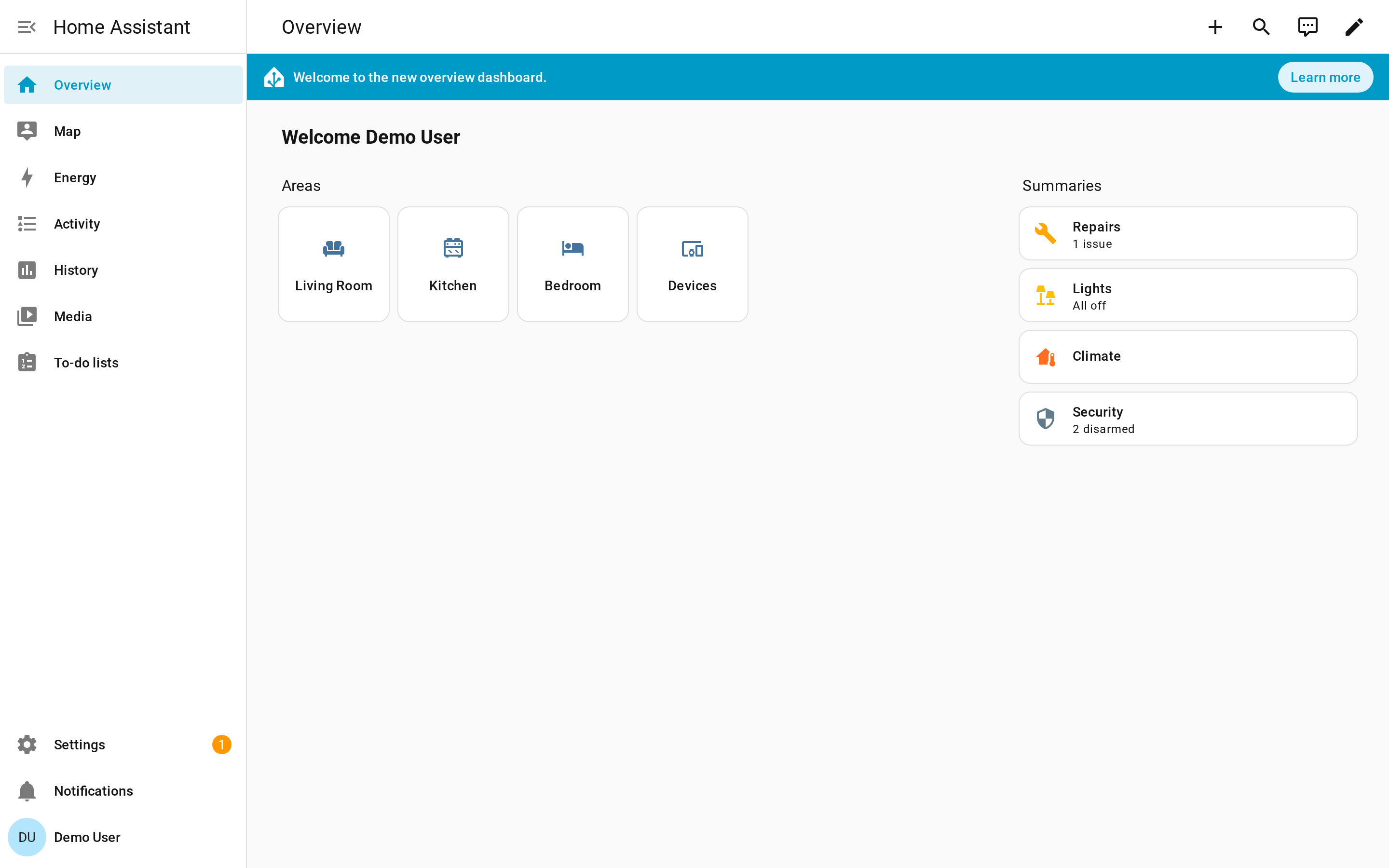
      01-overview.png            — Lovelace
      02-integrations-list.png   — HAI/Leviton sitting next to HA's built-ins
      03-omni-pca-config.png     — '1 device · 38 entities', custom integration
      04-panel-device.png        — Omni Pro II device page with full controls
      05-entities-omni.png       — config_entry filtered entities table
      06-developer-states.png    — alarm_control_panel.omni_pro_ii_main with
                                   raw_mode_name=OFF, code_arm_required=true,
                                   etc. proving real entity state from mock

dev/docker-compose.yml — mock-panel command rewritten:
  * Mounts only src/ and run_mock_panel.py (read-only) instead of the full
    project so uv doesn't try to recreate the host's .venv on a RO mount
  * Installs cryptography via uv pip install --system
  * PYTHONPATH set to /tmp/mock/src so omni_pca imports work without a
    package install

dev/artifacts/screenshots/2026-05-10/ — six PNGs from the run.

.gitignore — adds dist/ for build artifacts.

Confirmed end-to-end: HA discovered the integration via mDNS hint
(showed up in the onboarding wizard's compatible-devices step), the
config flow connected to the mock over host.docker.internal:14369,
materialized 38 entities across 8 platforms (alarm_control_panel,
binary_sensor, button, climate, event, light, sensor, switch), and
displayed everything in the device + entity registries with friendly
names and attributes intact. The integration name hash is 38 entities
because the mock seeds 5 zones (binary + bypass) + 4 units + 2 areas +
2 thermostats + 3 buttons + 3 system-level binary sensors + 2 system
sensors + 6 thermostat sensors + 1 event entity = 38 (matches HA UI).
107 KiB
2880x1800px
107 KiB
2880x1800px